- 8th December 2025
How Weather Impacts Flight Operations:
What Passengers and Airlines Need to Know
Weather remains one of the most critical and least predictable factors in aviation. It shapes how flights are planned, how airports operate, and most importantly how safely aircraft can take off, cruise, and land.
For airlines, pilots, air traffic controllers, and ground handling leaders like NBJ VIP Ground Handling Ltd., changing weather conditions are daily operational challenges that demand careful planning and split-second decisions. For passengers, these conditions often manifest as delays, cancellations, longer taxi times, or unexpected diversions. However, behind every delay is an unwavering commitment to safety.
This guide explains exactly how different weather conditions affect flight operations and what you need to know to navigate them.
Why Weather Matters More in Aviation
Unlike road transport, aircraft operate in three dimensions and must follow strict performance limits regarding visibility, wind, temperature, and runway conditions. Even modest changes in weather can affect lift, braking distance, climb performance, and cockpit workload.
Regulators and airlines set clear weather minimums for takeoff and landing. If conditions fall below these thresholds, flights must be delayed, rerouted, or cancelled. While frustrating, these choices are made to protect lives, aircraft, and infrastructure.
Ground handling teams, including NBJ VIP, play a critical role here. They must adjust ramp procedures, equipment usage, and turnaround plans in real-time as the elements change.
1. Weather Conditions that Commonly Affect Flights
Here is a breakdown of weather phenomena that cause the most disruption and how they are managed
1.1 Fog and Low Visibility
Fog and low visibility are among the most common reasons for delays, particularly in the early morning. This is a global operational challenge: London Heathrow frequently activates low visibility procedures during winter, causing widespread schedule changes, while Lagos, Abuja, and other African airports often face severe visibility restrictions due to seasonal Harmattan dust haze
- For Airlines & Operations: Airports may introduce Low Visibility Procedures (LVP), drastically reducing the number of aircraft landing and departing per hour. Ground teams must move slowly and carefully, and vehicle movement on the ramp is strictly controlled.
For Passengers: You may experience holding patterns in the air or diversions to alternate airports, even if the weather looks “fine” from your window. Safety margins for visibility are non-negotiable.
1.2 Thunderstorms, Lightning and Heavy Rain
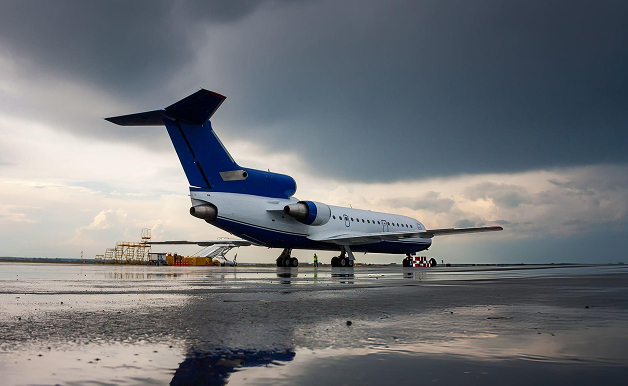
Thunderstorms are a “cocktail” of hazards: lightning, severe turbulence, wind shear, hail, and heavy rain. Aircraft must maintain a wide distance from intense storm cells, and airport ramp areas become hazardous zones during lightning strikes.
For Airlines & Operations: Ramp activities such as fueling, baggage loading, and boarding must be halted immediately when lightning is detected within a certain radius. Operations Control Centers will reroute flights to avoid storm cells, leading to longer flight times.
For Passengers: You may be asked to remain on board after landing because ramp staff are under a “lightning hold” and cannot safely approach the aircraft. Departures may show as “boarding” but will not move until the lightning risk passes.
1.3 Strong Winds, Crosswinds and Wind Shear
Wind speed and direction are critical calculations for takeoff and landing. Aircraft have specific limits for crosswinds (wind blowing across the runway) and tailwinds. Wind shear, a sudden change in wind speed or direction, is particularly dangerous near the ground.
For Airlines & Operations: Air Traffic Control may change runway usage to align with the wind, reducing traffic flow. Pilots may initiate a “go-around” (aborting the landing and climbing back up) if the approach becomes unstable due to gusts.
For Passengers: You might experience a go-around or a turbulent approach. It is vital to remember that a go-around is a standard, safe maneuver not a sign that the plane is failing.
1.4 Extreme Heat and High Temperatures
It isn’t just bad weather that causes delays; hot weather does too. High temperatures reduce air density, which directly impacts how much lift wings generate and how efficiently engines perform.
- For Airlines & Operations: In extreme heat, aircraft require longer runways to take off. Flight planners may have to impose weight restrictions, meaning less cargo or fewer passengers can be carried
For Passengers: On very hot days, especially at high-altitude airports, you might encounter baggage off-loading or flight rescheduling to cooler times of the day (early morning or late evening) to ensure the aircraft can take off safely.
1.5 Cold Weather, Snow and Ice
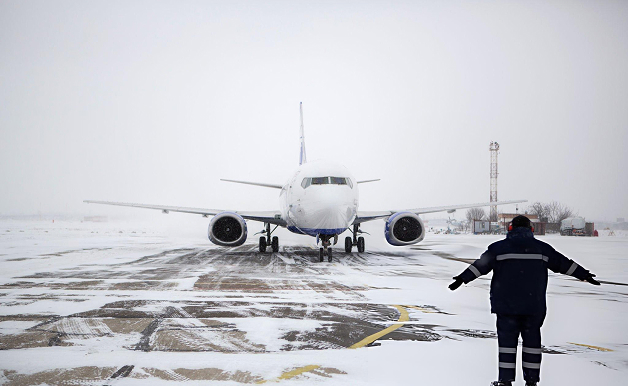
Winter conditions bring ice on aircraft surfaces, slippery runways, and frozen equipment. The “clean aircraft concept” dictates that no aircraft can take off with ice on the wings or tail, as it destroys lift.
For Airlines & Operations: Turnaround times increase significantly due to de-icing procedures. Runways must be constantly plowed and treated with chemicals, leading to slot restrictions and reduced airport capacity.
For Passengers: Expect to wait at the gate or on a remote pad while the aircraft is sprayed with de-icing fluid. This is a mandatory safety step.
2. How Airlines and Ground Teams Manage the Risk
To manage these risks, the industry relies on a combination of advanced technology and experienced personnel. Dispatchers and pilots monitor satellite imagery and radar continuously.
Schedules are often adjusted proactively around known seasonal patterns, such as Harmattan in West Africa or winter storms in Europe. Ground handling partners like NBJ VIP Ground Handling Ltd. are integrated into this process, adapting equipment deployment and safety protocols to match current forecasts.
3. Practical Tips for Passengers During Weather Disruptions
While you cannot control the weather, you can control how you prepare for it.
Check Status Frequently: Monitor your flight status via the airline’s app or website before leaving for the airport, especially during foggy or stormy seasons.
Pad Your Schedule: If traveling during a season known for weather disruptions, leave extra time for connecting flights.
Pack Smart: Keep essential items like medication, chargers, important documents, and a change of clothes in your carry-on in case of overnight delays or baggage offloading.
Use Notifications: Sign up for text or email alerts from your airline to receive real-time updates on gate changes and delays.
Stay Patient: Remember that ground staff and flight crews are complying with strict safety laws. A delay is always better than an unsafe takeoff.
Conclusion
Weather is one of the most unpredictable but influential factors in aviation. From fog and storms to extreme heat and high winds, every condition requires careful planning and expert decision-making.
At NBJ VIP Ground Handling Ltd., we are committed to ensuring safe, reliable, and seamless flight operations under all weather conditions. Through real-time monitoring, safety-focused ramp procedures, and coordination with airlines and global partners, we help keep aviation moving, no matter the skies.
For airlines and operators seeking a ground handling partner that understands both operational complexity and passenger impact, NBJ Ground Handling Limited is ready to assist.